

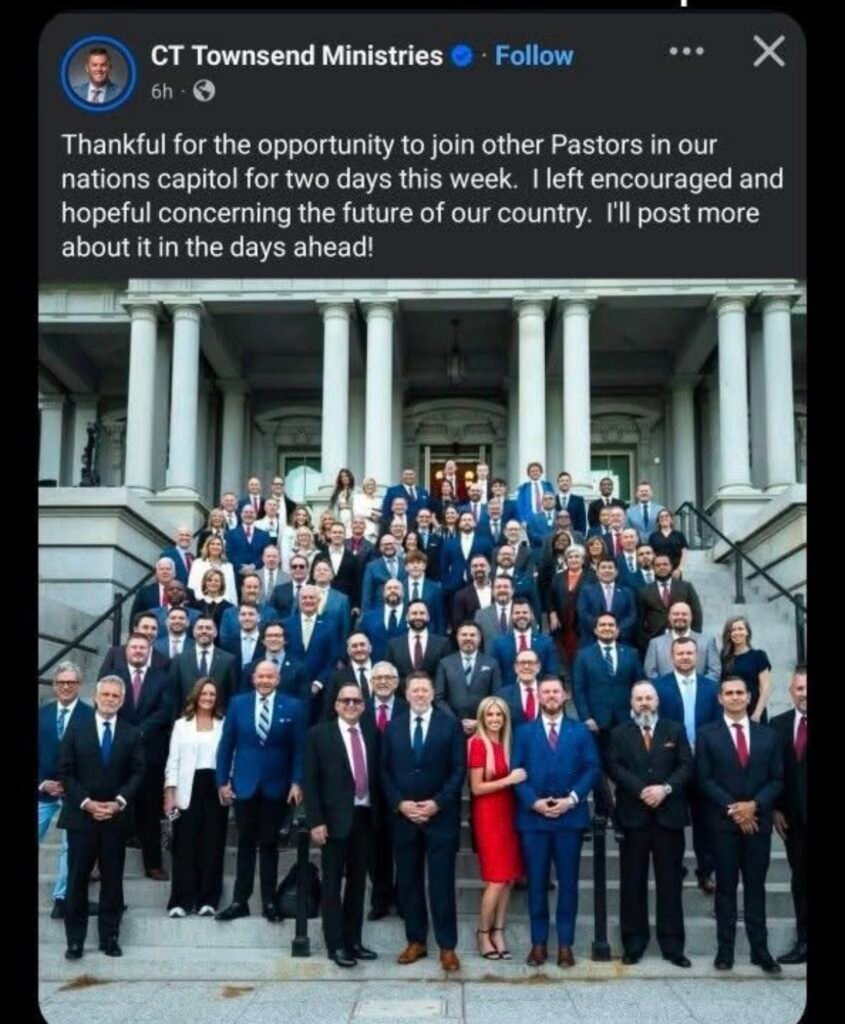
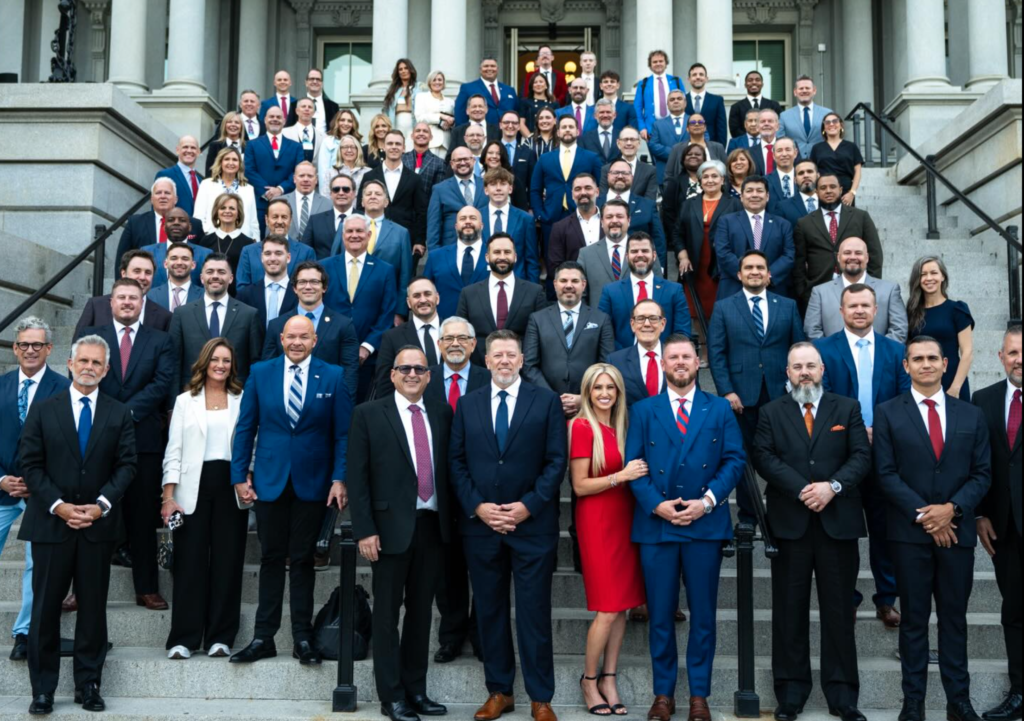
Reports have surfaced of a gathering of approximately 115 pastors at the White House. Individuals from a wide range of denominations and theological backgrounds, assembled under the banner of unity and shared purpose.
At first glance, this may appear commendable. After all, does not Scripture call for unity among believers? But the real question is what kind of unity does God actually command?

I want to be clear from the outset. I am thankful for the preservation of religious liberty in this nation. I desire, as Scripture teaches in 1 Timothy 2:2, to live a quiet and peaceable life in all godliness and honesty. In many respects, this was a driving factor in my political decisions to vote for Donald Trump.
As a Baptist and a constitutionalist, I hold firmly that the government should not give preferential treatment to any one religion. The state is not tasked with enforcing Christianity. Religious liberty must extend to all whether one agrees with those religions or not.
But what has taken place here is not merely about religious liberty.
It is about ecumenical unity—and that is something entirely different.
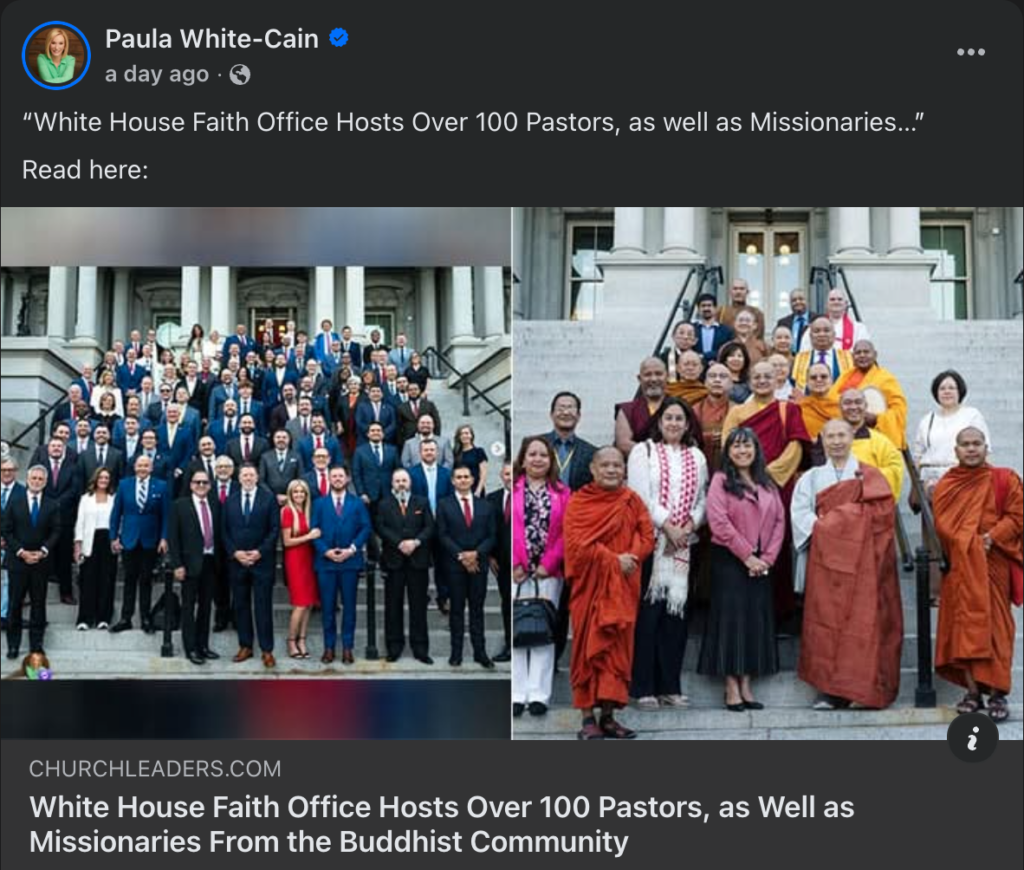
Christian ecumenicalism, at its core, seeks to bring together professing Christians across doctrinal lines in pursuit of visible unity. In settings like this White House gathering, that unity often extends beyond cooperation and begins to blur theological distinctions. Baptists, Catholics, charismatics, and mainline Protestants stand shoulder to shoulder, presented as though they share a common faith in the same sense.
But Scripture never defines unity as organizational closeness or political alignment.
It defines unity as shared truth.
The Bible is not silent on this matter. Amos 3:3 asks a simple but piercing question: “Can two walk together, except they be agreed?” Unity, according to Scripture, is not built on political proximity. It is built on agreement in truth. The apostle Paul reinforces this in Romans 16:17: “Now I beseech you, brethren, mark them which cause divisions and offences contrary to the doctrine which ye have learned; and avoid them.” While often applied narrowly, the principle is broader: there can be no true spiritual fellowship where there is not true doctrinal agreement.
And when pastors who fundamentally disagree on the gospel itself present themselves as unified spiritual leaders, something has gone wrong.
That concern is only heightened when we consider what followed this gathering. According to a report by ChurchLeaders, Paula White-Cain, connected to the same White House faith efforts, met with Buddhist leaders in a separate session that included prayer and spiritual dialogue.
This is no longer simply Christians navigating political space while maintaining doctrinal integrity. This is the merging of fundamentally incompatible belief systems under a shared spiritual banner. Christianity, which proclaims salvation by grace through faith in Jesus Christ alone, is placed alongside Buddhism, which denies the personal God of Scripture and offers no atoning Savior.
This is not cooperation.
This is confusion.
Not all doctrinal differences are equal. There is a difference between disagreements over secondary matters and disagreements over the gospel itself. When justification, authority, salvation, and the nature of Christ are defined differently, we are not dealing with variations of the same faith, we are dealing with entirely different messages.
Galatians 1:8 could not be clearer: “But though we, or an angel from heaven, preach any other gospel unto you… let him be accursed.”
Ecumenical movements often require participants to downplay or remain silent on these differences for the sake of unity. But the moment truth is minimized to maintain fellowship, that fellowship ceases to be biblical.
There is also a second danger here. Baptists, historically, have taken seriously the alignment of church leaders with political power in ways that blur spiritual authority. Christians are commanded to pray for leaders and engage society, but there is a line between influence and entanglement.
Biblical unity is not unity at any cost. Ephesians 4:13 defines it as “the unity of the faith, and of the knowledge of the Son of God.” It is unity in truth, in doctrine, in the Gospel. Anything less is not the unity Christ prayed for in John 17.
Christian Ecumenicism is not revival.
It is not a move of God. It is not the work of the Holy Ghost.
This is the kind of environment that Scripture warns will characterize the last days, a unifying religious spirit that brings together differing beliefs under one umbrella while setting aside biblical truth. The road to that system is not paved in open rebellion, but in gradual compromise.
And that is exactly what we are seeing.
For that reason, a clear word must be spoken: no Baptist preacher should have been part of that gathering. Not one. There is no pragmatic argument, whether influence, access, or opportunity, that justifies participation in a setting where God’s word is inevitably softened for the sake of unity.
The church does not need a seat at the table.
It needs a backbone.
The responsibility of the believer is not to blend in, but to stand apart. Not to gain proximity to power, but to remain faithful to the Gospel. Because once truth is traded for influence, both are lost.
The gathering of pastors at the White House may be praised as unity.
But believers must ask a deeper question:
Is this unity grounded in truth, or is it unity built on silence?
About The Author








Amen
Thank you
I absolutely agree with the said article!
Very well written with a backbone!