

One of the greatest casualties of modern politics is the ability to hold two thoughts in tension at the same time. Our political culture has become so thoroughly tribal that every issue is treated like a sporting event where absolute loyalty is demanded. If your preferred politician proposes something you have wanted for years, you are expected to defend not only the outcome but also the method by which it is achieved. To question the process is viewed as betrayal. To criticize the means is interpreted as opposition to the end. That is not wisdom. It is intellectual laziness, and sadly, many Christians have embraced it.
I have been outspoken in my opposition to the modern interpretation of birthright citizenship. I believe the Fourteenth Amendment has been expanded far beyond the purpose for which it was originally adopted after the Civil War. Citizenship is more than geography. It is loyalty between a people and their nation. A child should not automatically inherit American citizenship simply because his parents happened to be standing on American soil when he was born. I remain convinced that this issue deserves serious constitutional reconsideration.
Having said that, I do not believe an executive order is the proper mechanism for accomplishing that objective. Those two statements are not contradictory. In fact, they are perfectly consistent. If we truly believe the Constitution limits the powers of government, then we cannot abandon those limits whenever they become inconvenient to our preferred political outcome. A constitutional republic cannot long survive if every president simply governs by executive decree whenever Congress refuses to act.
The Framers of our Constitution understood something that many Americans have forgotten: power is dangerous regardless of who possesses it. That is precisely why they divided authority among three separate branches of government. Congress was given the responsibility to legislate, the Executive to enforce the law, and the Judiciary to interpret it. These were deliberate safeguards against the concentration of power. If Congress neglects its responsibility, the answer is not to transfer legislative authority to the President. The answer is to demand that Congress fulfill the duty the Constitution already assigned to it.
One of the marks of political immaturity is celebrating executive power only when it advances our own agenda. Conservatives rightly complained when previous administrations attempted to reshape the nation through executive orders that bypassed Congress. If we applaud the same practice simply because it now produces outcomes we favor, then our commitment was never to constitutional government. It was merely to political victory. Principles that only apply when your opponents hold office are not principles at all. They are preferences.
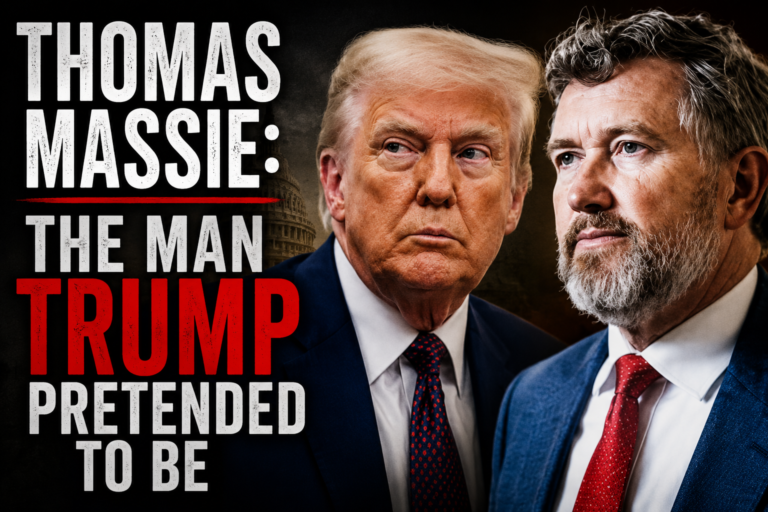
This is one reason I resist becoming a political cheerleader. My loyalty is not to Donald Trump, nor to the Republican Party, nor to any political movement. My loyalty is to truth, biblical principles, and constitutional government. That means I reserve the right to agree with a politician when he is right, disagree with him when he is wrong, and refuse to surrender my convictions for the sake of partisan unity. Too many today have replaced discernment with team loyalty. They assume that criticizing a method automatically means rejecting the goal. It does not.
The Scriptures repeatedly remind us that God is concerned not only with what we accomplish but also with how we accomplish it. Saul’s unlawful sacrifice was motivated by urgency, yet God rejected it. Uzzah reached out to steady the ark with good intentions, yet he ignored God’s prescribed order. David himself eventually learned that even noble objectives must be pursued according to God’s appointed means. The lesson is timeless. Good intentions do not sanctify improper methods. Means matter because God is a God of order.
For that reason, I can simultaneously oppose birthright citizenship as it is currently interpreted and oppose the use of sweeping executive authority to rewrite such a significant constitutional question. Those positions are not at war with one another. They are held together by a greater commitment to principle. If the Constitution requires legislative action or constitutional amendment to correct an error, then that is the path we should pursue, even if it is slower and more difficult. Expediency has never been a sufficient justification for expanding governmental power.
Perhaps what concerns me most is how incapable many people have become of holding nuanced positions. We have been conditioned to believe that every issue requires complete allegiance to one political tribe or the other. We have forgotten that wisdom often lives in tension. I can support secure borders without hating immigrants. I can oppose birthright citizenship without opposing lawful immigration. I can appreciate much of President Trump’s agenda while believing that some executive orders exceed the proper scope of presidential authority. Those positions are not inconsistent. They are what happen when principles govern politics instead of politics governing principles.
Christians should be the last people willing to sacrifice truth upon the altar of tribalism. Political victories are temporary. Executive orders are signed and rescinded. Presidents come and go. But constitutional principles endure, and biblical convictions will endure even longer. If we only defend constitutional limits when they restrain our opponents, we are not really defending the Constitution. We are merely defending ourselves. True integrity is measured by our willingness to uphold principle even when it slows the achievement of outcomes we deeply desire.
About The Author














Amen
Thank you
Very well said. I feel the same way. And sadly, I am around Christians that back President Trump no matter what. Bullying is not a great character quality in a president. Thanks for the article.