This weekend, Christians around the world, as they do every Sunday, will proclaim the truth of the resurrection of Jesus Christ with boldness. But there is a question that often goes unaddressed, especially in modern discussions of the Bible:
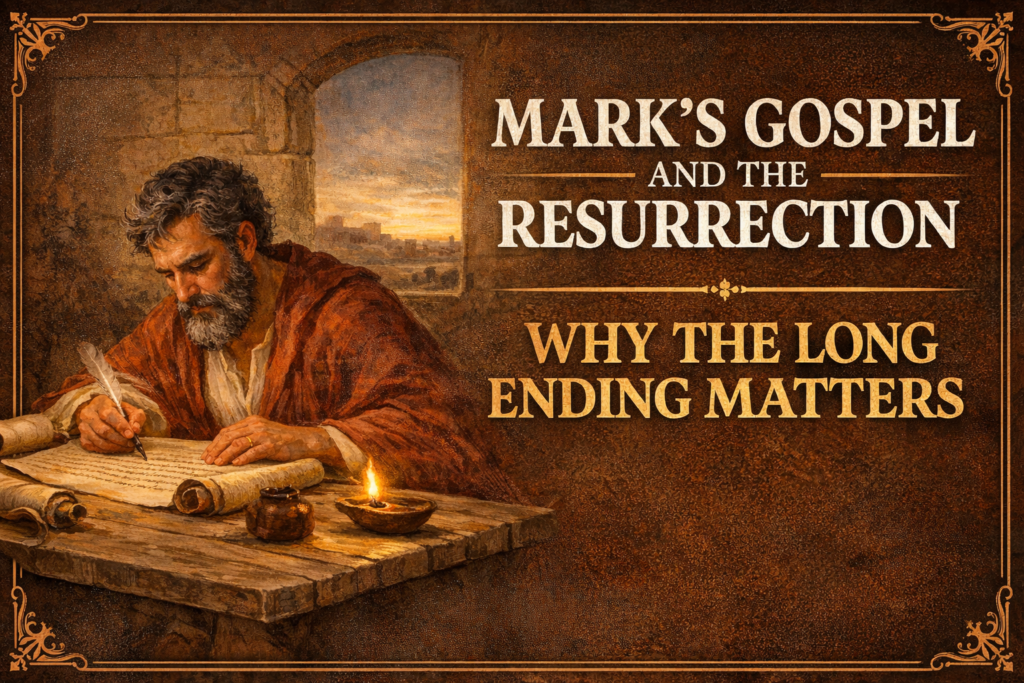
What happens to that proclamation in the Gospel of Mark if the long ending (Mark 16:9–20) is removed?
Some argue that these verses are not original. Many modern Bibles bracket them or place them in footnotes. Yet when we examine the evidence carefully, a different picture emerges, one that shows the long ending is not only defensible, but necessary to the completion of Mark’s Gospel.
Much is made of the fact that two early manuscripts omit Mark 16:9–20. That point is repeated often, but rarely in full context.
The overwhelming majority of Greek manuscripts include the long ending. It is not a marginal reading; it is the dominant one across the history of transmission.
Even more compelling is the testimony of the early church. Irenaeus, writing in the second century, directly quotes Mark 16:19 and attributes it to Mark’s Gospel. That places the long ending well within the earliest generations of Christian witness.
So the question is not whether the passage was known, it clearly was. The real question is whether the church received it. And the answer, historically, is yes.
Two manuscripts omit it. The church preserved it.
Critics often point to differences in vocabulary and style as evidence against the long ending. But that argument assumes that a writer must sound the same in every section of his work.
That is not how writing works.
Mark 16:1–8 captures shock, fear, and confusion at the empty tomb. It is abrupt because the moment is overwhelming. But a Gospel should not end in confusion, it should resolve in clarity.
The long ending provides exactly that:
- Christ appears
- Unbelief is confronted
- The disciples are commissioned
- The ascension is declared
This is not an interruption of the Gospel. It is its completion.
Even Paul the Apostle varies tone when moving from argument to conclusion. A shift in style does not signal a different author, it signals a different purpose.
And here, the purpose is unmistakable: to bring the resurrection account to its proper conclusion.
One of the strongest confirmations of the long ending is how naturally it aligns with the rest of the New Testament.
It introduces no strange doctrine. It simply reinforces what is already revealed elsewhere:
- Resurrection appearances → consistent with all four Gospels
- The Great Commission → echoes Matthew 28
- Signs accompanying believers → seen throughout Acts
Consider the details:
- Casting out devils → Acts 16
- Speaking in tongues → Acts 2
- Protection from harm → Acts 28
In Acts 28, Paul the Apostle is bitten by a venomous serpent and suffers no harm, directly reflecting the promise in Mark 16:18.
This is not theological innovation. This is theological confirmation. For centuries, the long ending of Mark was read, preached, and received without controversy.
That raises a serious implication for those who reject it:
If the long ending is not authentic, then the church universally embraced an incomplete Gospel for over a thousand years.
That is not a small error. It is a massive one.
A far more reasonable conclusion is that the passage endured because it belonged—recognized, preserved, and passed down as part of the Gospel itself.
Now we come to the heart of the matter, especially fitting on Easter weekend.
If Mark ends at 16:8, here is what we are left with:
The women flee from the tomb in fear.
They say nothing to anyone.
And the Gospel ends.
There is:
- No appearance of the risen Christ
- No interaction with the disciples
- No commission
- No visible triumph
The resurrection is announced, but never shown.
That is not just abrupt. It is unfinished.
If Mark truly ends at verse 8, then it becomes the only Gospel that contains no recorded appearance of the risen Christ within its own account.
The other Gospels, Matthew, Luke, and John, all culminate in visible, bodily encounters with the resurrected Lord. They do not leave the reader in silence. They declare victory.
But an ending at Mark 16:8 leaves us with fear, silence, and an empty tomb without resolution.
So the question must be asked:
Can a document truly function as a Gospel, a proclamation of good news, if it never actually presents the risen Christ to its reader?
The long ending answers that question.
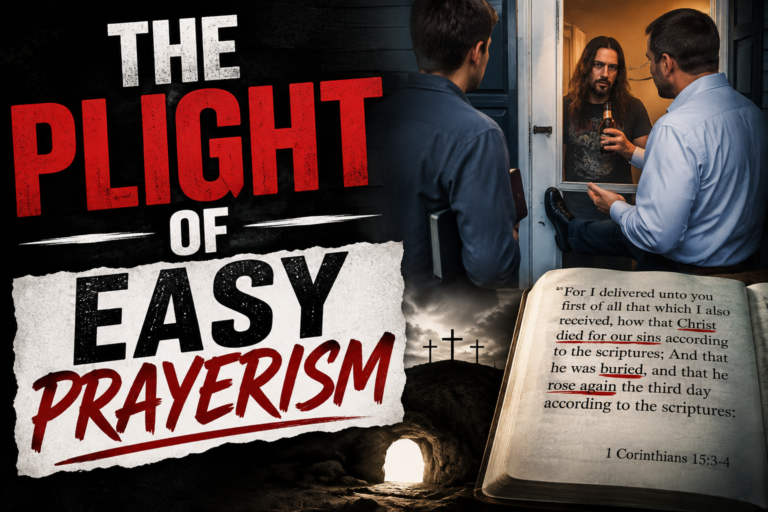
Paul said, “For I delivered unto you first of all that which I also received, how that Christ died for our sins according to the scriptures; And that he was buried, and that he rose again the third day according to the scriptures:And that he was seen of Cephas, then of the twelve: After that, he was seen of above five hundred brethren at once; of whom the greater part remain unto this present, but some are fallen asleep. After that, he was seen of James; then of all the apostles. And last of all he was seen of me also, as of one born out of due time (I Corinthians 15:3-8).”
About The Author







Thank you for this Important article. Because of 1 Corinthians 15:5-8, I would say the Gospel of Mark, and the gospel of grace, must include the post-resurrection appearances of Jesus.
Amen
Thank you