It is sometimes claimed that the belief that the Baptist people have existed since the time of the Apostles is “Trail of Blood revisionism,” as if the Texas Baptist historian J. M. Carroll invented this idea with his famous book The Trail of Blood in 1931. That claim, as such, is demonstrably false, since the Anabaptist historian Thieleman J. van Braght had published his well-documented 1,141-page book The Martyrs Mirror, proving the same concept, in 1660. However, the truth is that modern secular historians and archaeological research continue to prove that the earliest Christians held to Baptist doctrine.
In this article, we will discuss two important archaeological discoveries proving the Baptist positions of the early Christians concerning the ordinances. Those two archaeological sites are the Dura-Europos church in Syria and the Megiddo church in Israel.
Before we discuss these historical sites, let’s take a moment to consider what the Baptist views are on the ordinances.
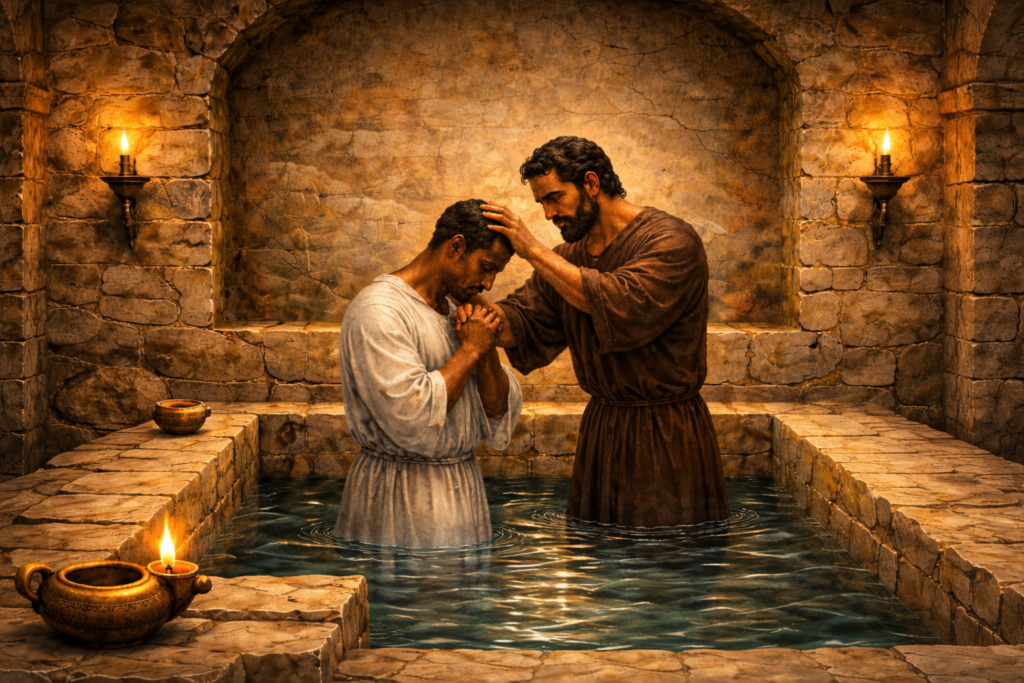
As Baptists, we believe that the ordinance of baptism is to be administered only to believers and that it is to be performed by immersion (dunking). Scripture demonstrating this truth would include:
Acts 8:36–38
“And as they went on their way, they came unto a certain water: and the eunuch said, See, here is water; what doth hinder me to be baptized? And Philip said, If thou believest with all thine heart, thou mayest. And he answered and said, I believe that Jesus Christ is the Son of God. And he commanded the chariot to stand still: and they went down both into the water, both Philip and the eunuch; and he baptized him.”
This passage clearly demonstrates that baptism is for believers in the words “If thou believest with all thine heart…” and that it is performed by immersion in water: “and they went down both into the water, both Philip and the eunuch; and he baptized him.”
Now, as regards the doctrine of the Lord’s Supper, Baptists believe that the bread and wine are neither spiritually nor physically transformed into the actual flesh and blood of Christ, but rather that the supper is a memorial. It is eaten to remember the shed blood and broken body of Jesus Christ.
1 Corinthians 11:24
“And when he had given thanks, he brake it, and said, Take, eat: this is my body, which is broken for you: this do in remembrance of me.”
It’s obvious from this passage that the bread is not physically transformed into the body of Christ, as the disciples were looking at His physical body while eating the bread, and the scripture directly states the words of Christ, “this do in remembrance of me,” demonstrating that the supper is a memorial.
So then, what does the archaeological evidence say about these teachings?
Dura-Europos church is an ancient house church in Syria. It was a private house that was converted into a Christian meeting house by knocking out some walls to make large rooms for services. On the outside, it still would look like a normal residence to hide its true purpose from the Roman authorities, but inside it was transformed into a church building. This house was modified for church services sometime between 233 AD and 256 AD. In other words, it was something like 75 years before Constantine the Great would marry the church and state, creating Roman Catholicism. This site was uncovered by a French-American team of archaeologists during excavations from 1931–1932. While the current state of the site is unknown since ISIS took control of it in 2011, and it has likely been destroyed now, enough study was done on the site to document some interesting information.
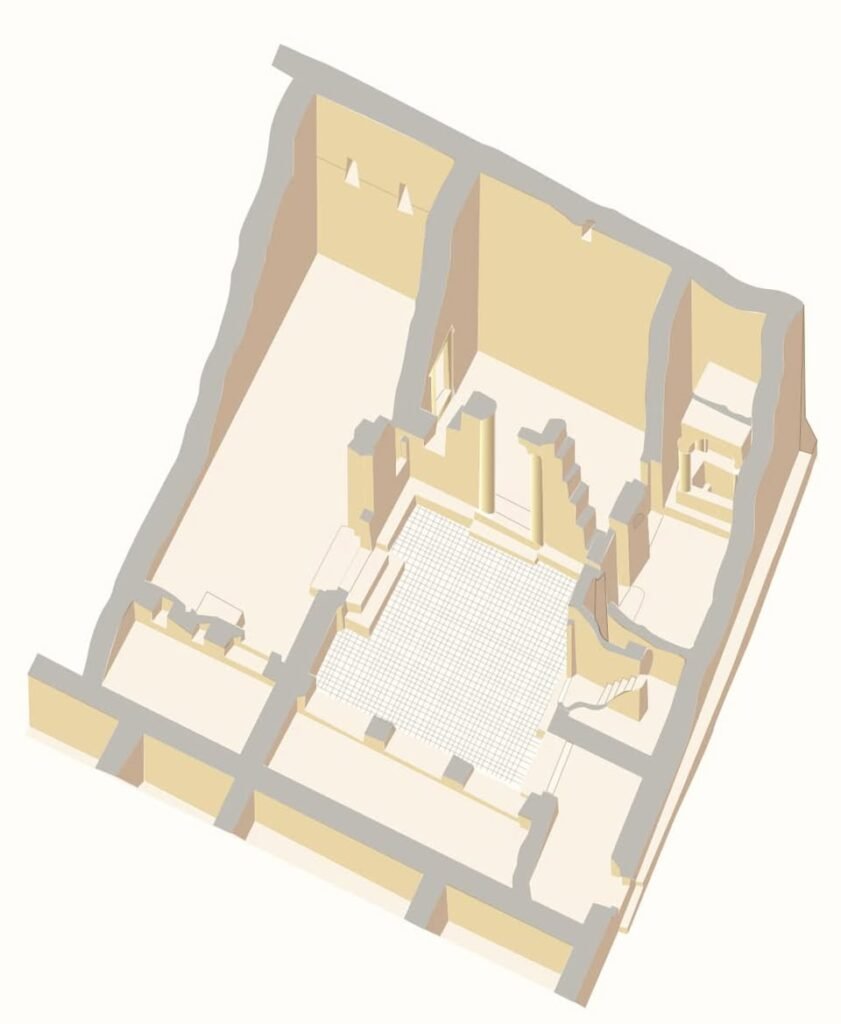
One of the most interesting things about Dura-Europos is that the Christians had built an indoor baptistery. This baptistery was almost 5.5 ft wide and over 3 ft deep. A baptistery that size is obviously intended for full immersion baptism. If their method of baptism was sprinkling infants, as is commonly practiced in Catholicism and Protestantism, a small bowl would have been much more efficient and a better use of space in a small house church environment. This site clearly demonstrates adult (and therefore believers’) baptism by immersion.
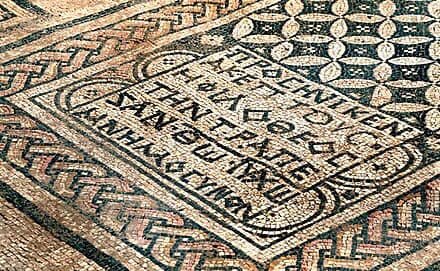
The second site is Megiddo church in Israel. As its name suggests, it is located in the valley of Armageddon, where Christ will defeat the armies of Antichrist at the end of the tribulation. The site was discovered in 2005. It is the remains of a secret Christian meeting house dated to 230 AD and was abandoned around 305 AD (again, this predates Roman Catholicism). One of the most important aspects of this site is that its ruins include one of the oldest inscriptions referring to the deity of Jesus Christ (take that, Joshua Alvarez and Cody Waters). Of course, we are not surprised to find archaeological evidence that the earliest Christians believed Jesus was God, since the scripture directly states such to be the case.
1 Timothy 3:16 KJV
“And without controversy great is the mystery of godliness: God was manifest in the flesh, justified in the Spirit, seen of angels, preached unto the Gentiles, believed on in the world, received up into glory.”
What is less often discussed, but significant for our discussion today, is that the inscription refers to a communion table and reads:
“The God-loving Akeptous has offered the table to God Jesus Christ as a memorial.”
Therefore, not only does this inscription testify that the early Christians believed in the deity of the Lord Jesus Christ, but also that they held the view of the Baptist people that the supper is a memorial done in remembrance of the sacrifice of Jesus Christ.
As Bible believers, we don’t need any modern archaeology to tell us what to believe. We would believe these doctrines regardless of any evidence outside of the scripture that supports them; however, it is useful for us to know that history and modern research continue to prove what Baptist historians have been saying for hundreds of years.
About The Author



Very interesting
Excellent
Thank you