
Biblical Duty
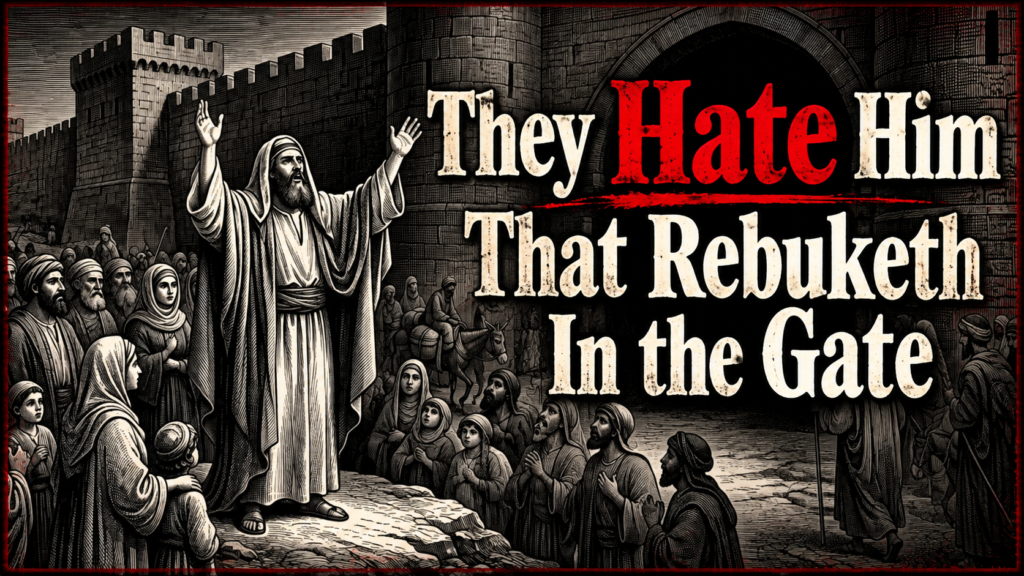
Open-air preaching was the responsibility of Old Testament prophets to proclaim God’s word.
Amos 5:10 and Jeremiah 23 reveal an important principle. Hatred of the prophet goes hand in hand with hatred of the truth.
The City Gate
Amos 5:10 says:
“They hate him that rebuketh in the gate, and they abhor him that speaketh uprightly.”
The city gate was the center of human engagement. Judges held court, city leaders made policy, and merchants sold their goods. When God sent a preacher to the gate, they stood directly in the path of those passing by. There was no retreat from the truth.
We see this Biblical pattern extended to the New Testament preachers in the Book of Acts.
Notice the lessons we learn from this text in Amos:
- They despise the truth, not just the man: The crowd’s response is grounded in their hatred of the light (John 3:19-20). Not necessarily the messenger. (1 Cor. 1:18)
- Exposure, not compromise: Rebuke is not compromise, not flattery, not tolerance of sin. It is exposure of wickedness in the sight of a Holy and Just God. (Rom. 16:18; Eph. 5:13)
- Friction demonstrates faithfulness: When you oppose blatant wickedness with genuine righteousness, conflict is inevitable. Hostility from an ungodly society isn’t proof that preaching is wrong; it often confirms the preacher’s message is on point.
One street preacher argued that a completely neutral or indifferent response to open-air preaching meant that the true power and conviction of the Holy Spirit had not been fully delivered.
“Remember the word that I said unto you, The servant is not greater than his lord. If they have persecuted me, they will also persecute you; if they have kept my saying, they will keep yours also.” – (Jhn 15:20)
What Upright Speech Demands
Observe Amos’s point: the world despises the man who “speaketh uprightly.” This phrase refers both to what you say and how you deliver it. It highlights standards often overlooked in modern street preaching:
- Avoid personal commentary: A street corner isn’t the place for your favorite political rants, pet theories, or culture-war venting. When you replace the words of God with your own opinions, you stop representing truth and become just a mouthpiece for your personal convictions. (2 Tim. 4:2)
- Add genuine grace to the rebuke: Speaking uprightly isn’t about the volume of your voice or the number of “gotcha’s” you bring. Colossians 4:6 instructs us to keep our speech “be alway with grace, seasoned with salt,” not the other way around. Salt can sting, but its main purpose is preservation. Grace ensures that our sharpest rebukes flow from a sincere heart invested in the truth, not bitter theatrics.
- The Bible is our Final Authority: Jeremiah and Ezekiel based their arguments not on clever rhetoric but on the firm declaration: “Thus saith the Lord.” If your message isn’t rooted in God’s written word, it has no power to convict the conscience.
The Trap of False Counsel
Jeremiah chapter 23 offers us a sobering look at what happens when the pulpit rots from the inside. Right before Babylon captured and destroyed Jerusalem, the Lord exposed the religious leaders who had abandoned their calling:
- Bad doctrine leads to moral decay: God saw folly in Samaria because men prophesied by Baal and misled others. When preachers speak from the wrong spirit, morality declines rapidly.
- Compromise strengthens sinners: In Jerusalem, leaders lived double lives, encouraging evil so no one repented: Jer. 23:14, “they strengthen also the hands of evildoers, that none doth return from his wickedness.” Weak, fleshly preaching removes God’s fear, comforting sinners on their way to destruction, turning entire cities like Sodom.
- Preaching a “vision of their own heart”: God told people to stop listening to prophets with false visions. Anyone venting carnal fury from a street corner or pulpit invalidates their own ministry.
- The only solution: God’s answer in verse 22 is that if men had “stood in His counsel” and “caused my people to hear my words…then they should have turned them from their evil way,” the Lord would have had liberty to exercise grace and mercy:
“Am I a God at hand, saith the LORD, and not a God afar off? (Jer 23:23)
Think about that for a moment. Faithful preaching anchors a people; corrupt preaching speeds their ruin. The only message that can shatter a hard heart is pure, unadulterated words of God.
The Public Minister Today
The street preacher’s mandate has not shifted an inch:
- Linger in God’s presence first: Before you step onto a city sidewalk, get on your knees. Saturate yourself in the Bible. You cannot carry the counsel of heaven to strangers if you have not spent time alone with the King.
- Preach the pure word, never yourself: Drop the angry rants and petty soapbox hobbyhorses. Sinners do not need your thoughts on the headlines. They need the pure, written word of God to bring conviction and point them to Jesus Christ, the eternal Word made flesh.
- Wound with the law to heal with the gospel: Lay the righteous standard of God across their conscience to break their stubborn pride (2 Cor. 4:4). We don’t preach at the gate to win arguments. We preach to win men.
“Preach the word; be instant in season, out of season; reprove, rebuke, exhort with all longsuffering and doctrine.” (2 Tim. 4:2)
Brought to you by Robert Gamis of The Immutable Word — defending Bible-believing truth in an age of compromise. Visit The Immutable Word for more biblical teaching and apologetics.
For more cultural commentary, Bible studies, and interviews, subscribe to The Watchman’s Warning on YouTube.
About The Author











Amen Brother. This is exactly right.
Amen!
Absolutely excellent,
Thank you