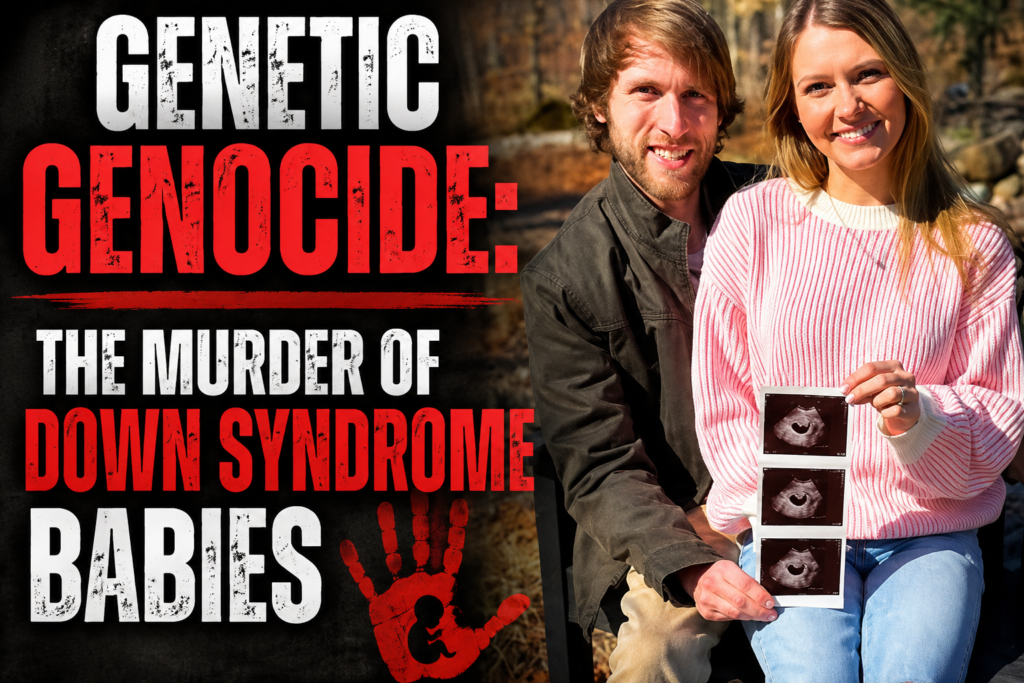
My wife is a nurse. She holds both a Bachelor of Science in Nursing and a Master’s degree in Medical Science. Years ago, while she was in college, she wrote an article examining the ethical implications of genetic modification and selection. Her conclusion was the dangers of technology like this potentially leading to a genetic genocide. It was after a discussion with her that I felt the need to speak to this subject.
Due to Trisomy 21, a people group has been targeted for extermination simply because a test suggested they possess an extra chromosome.
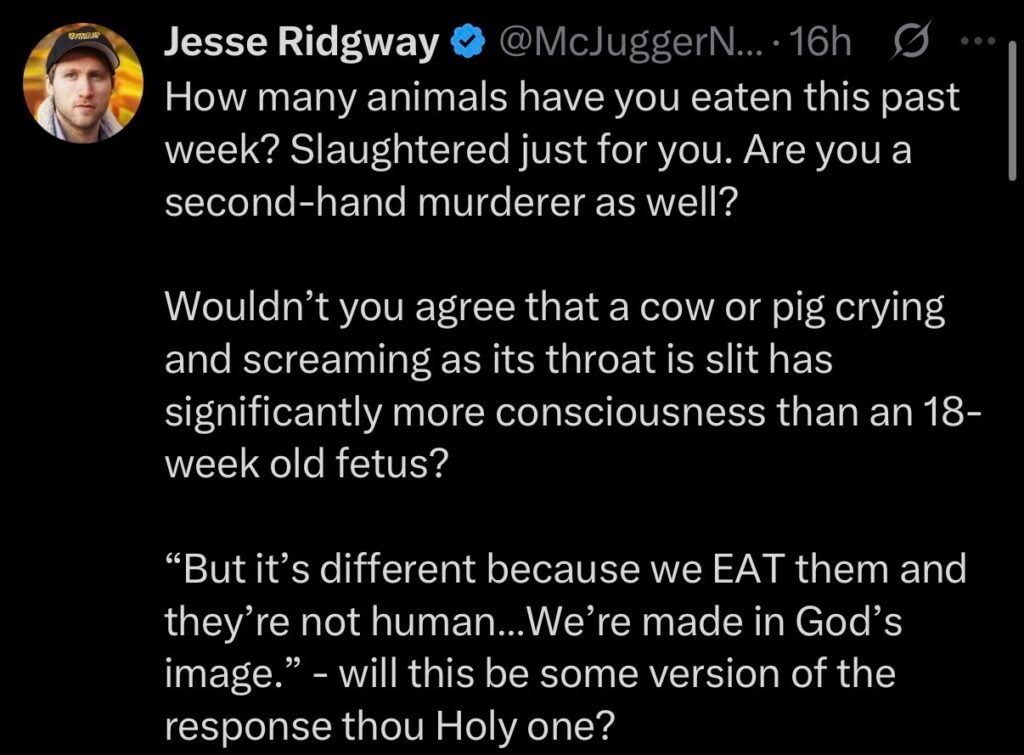
Following the recent public discussion surrounding the abortion obtained by self-proclaimed atheist and YouTuber Jesse Ridgway, better known as “McJuggerNuggets,” many people are debating the morality of terminating a pregnancy because the child has Down syndrome. To this man, it was more ethical to have his son dismembered than to slaughter a pig.
While individual circumstances often evoke strong pragmatic emotions, the larger ethical question remains unavoidable: Is it morally justifiable to end the life of a child because that child possesses a genetic condition?
For those with a Biblical worldview, all human life possesses inherent value. Even the Biblical endorsement of capital punishment for murderers aligns with the importance we place upon human life, but I digress.
What makes this issue particularly troubling is that modern society rightly condemns discrimination against people with disabilities after birth while often celebrating decisions that prevent those same individuals from being born in the first place. We champion inclusion, accessibility, and equal treatment for those living with Down syndrome, yet many remain silent when prenatal testing is used to identify these children before birth and eliminate them through abortion.
The result is a disturbing contradiction. We profess to value people with Down syndrome while simultaneously accepting a system that systematically reduces their numbers before they ever have an opportunity to live.
This is why I have chosen to use the phrase genetic genocide.
The term is intentionally provocative, but it reflects an uncomfortable reality. Through prenatal screening and selective abortion, society has identified a specific class of human beings based solely upon their genetic makeup and has facilitated their widespread destruction. The goal may not be racial purity, but the principle remains eerily similar: certain lives are deemed less worthy of existence because of their genetic characteristics.
History has a name for that way of thinking.
It is called eugenics.
Most people associate eugenics with the atrocities of Nazi Germany. Images of forced sterilizations, concentration camps, and racial purification programs immediately come to mind. Rightly so. The world recoils at the notion that human beings should be judged according to their genetic traits and permitted to live or die based upon their perceived usefulness or desirability.
Yet while we condemn the eugenics movements of the past, we have quietly embraced many of the same assumptions in the present.
The modern argument is not that people with Down syndrome should be eliminated after birth. Instead, it is argued that they should be prevented from being born at all.
The method has changed, but the underlying principle remains remarkably similar. A diagnosis is made. A genetic characteristic is identified. A determination is reached that life with that condition is less desirable. Then the child is aborted.
The result is the systematic reduction of an identifiable group of human beings based solely upon genetics.
The irony is impossible to ignore. Society spends millions of dollars promoting diversity and inclusion while simultaneously eliminating countless children whose only offense is possessing an extra chromosome.
If a culture selectively removes an entire category of human beings because of their genetic makeup, what else should we call it?
Many advocates of abortion argue that Jesus never addressed the issue directly. According to this line of reasoning, Christians should remain silent because Christ never explicitly mentioned abortion during His earthly ministry.
This argument fails for two reasons.
First, Jesus reaffirmed the moral law of God. In Matthew 19:18, He said, “Thou shalt do no murder.” If abortion is the intentional taking of innocent human life, then it falls squarely under the very commandment Christ Himself affirmed. One does not need a specific condemnation of abortion any more than one needs a specific condemnation of modern forms of theft, fraud, or kidnapping. The principle has already been established. God forbids the taking of innocent human life.
Second, Scripture consistently recognizes the humanity of the unborn.
One of the clearest examples appears in Luke chapter 1. When Mary visited Elizabeth, the Bible says:
“And it came to pass, that, when Elisabeth heard the salutation of Mary, the babe leaped in her womb…” (Luke 1:41).
A few verses later, Elisabeth again referred to John the Baptist as a “babe” (Luke 1:44). The same word used to describe John in the womb is also used elsewhere to describe infants after birth. Scripture does not recognize two different categories of humanity—one before birth and another afterward. John was a child in the womb, and he was a child outside the womb.
We find this same idea in 2 Samuel 11:5. After conceiving, Bathsheba informed David, “I am with child.” Significantly, Scripture describes the unborn life in her womb as a child, not as something less than fully human.
Modern society often attempts to dehumanize the unborn through language. We are told that the unborn child is merely a “fetus,” as though a change in terminology somehow changes reality. Yet the word fetus simply comes from the Latin word for offspring, young one, or child (Oxford Latin Dictionary, 1982). The label may sound more clinical, but it does not alter what is actually present.
The unborn child is not a potential human.
He is a human with potential.
Furthermore, Scripture teaches that God forms children in the womb (Psalm 139:13-16), knows them before birth (Jeremiah 1:5), and regards their lives as precious in His sight. The womb is not a place where a human being becomes a person. It is the place where a person develops.
This brings us back to the tragedy of Down syndrome abortions.
The child diagnosed with Trisomy 21 is not less human because of an extra chromosome. Humanity was created in the image of God. That baby possesses the same inherent dignity bestowed upon every member of the human race. To terminate that life because it may require additional care, face greater challenges, or fail to meet society’s standards of normalcy is not compassion. It is discrimination in its most lethal form.
History has repeatedly demonstrated the dangers of assigning human value based upon physical characteristics, intellectual abilities, or genetic traits. Every time a society has embraced such thinking, the result has been suffering and death.
The modern elimination of children diagnosed with Down syndrome is no exception.
A civilization that prides itself on tolerance and inclusion should be horrified by the systematic destruction of an entire class of people before they are even born. Yet many applaud it as progress.
Christians must not.
Every child possesses an inalienable right to life that no doctor, parent, government, or culture has the authority to revoke.
About The Author







Awful
Convict their hearts Lord.
Thank you brother Randy.
And thank your wife for sharing that .