How Convenience and Safety Are Reshaping Society’s View of Surveillance
For decades, “Big Brother” surveillance belonged to dystopian novels and late-night conspiracy theories. Cameras tracking our every move, machines analyzing our behavior, and algorithms deciding whether we are permitted to participate in society sounded like science fiction reserved for books like Nineteen Eighty-Four.
Now your car may soon decide whether you are fit to drive.
That sentence would have sounded absurd just a few years ago. Today, it sounds increasingly plausible.
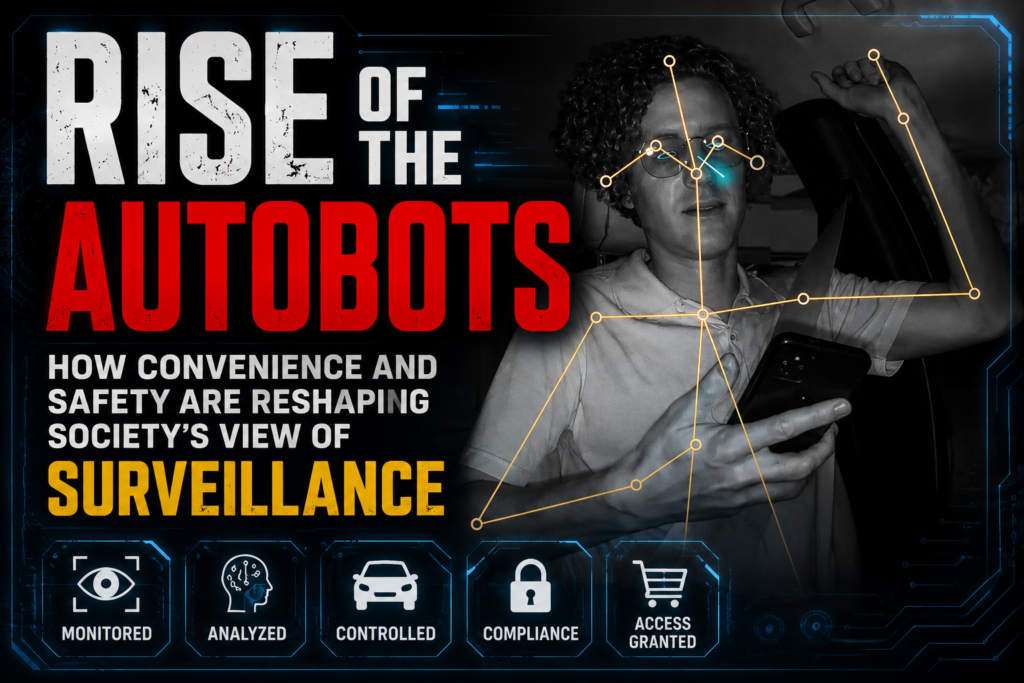
Recent developments in AI-powered driver monitoring systems, including technology associated with Ford Motor Company and broader federal safety initiatives, are pushing society toward a new era of behavioral surveillance. Under provisions tied to the 2021 Infrastructure Investment and Jobs Act, federal regulators were directed to develop impaired-driving prevention technology standards for new passenger vehicles, with implementation expected to begin around 2026–2027.
Ironically, the federal government and the National Highway Traffic Safety Administration (NHTSA) now appear to be at something of an impasse. Congress voted in favor of the initiative in 2021 and directed regulators to move forward with impaired-driving prevention systems in future vehicles. Yet recent reports indicate NHTSA itself has acknowledged that current technology is not sufficiently reliable for widespread mandatory implementation. Even systems boasting extremely high accuracy rates could still produce millions of false positives or failures nationwide.
Supporters argue the technology could save lives by identifying impaired, distracted, fatigued, or unsafe drivers before tragedy occurs. On the surface, that sounds entirely reasonable. After all, who wants drunk drivers on the road?
That is exactly why these conversations matter.
Most systems of surveillance are not introduced through fear. They are introduced through convenience and safety.
And that is where many Christians begin to notice a familiar pattern.
To be clear, this article is not claiming Ford is the Antichrist, nor is AI driver monitoring the “mark of the beast.” Sensationalism helps nobody. Yet it would also be naïve to ignore the unmistakable direction modern technology is heading. For the first time in human history, society possesses the technological capability to create systems of constant monitoring, behavioral evaluation, and participation control on a massive scale.
That reality naturally raises questions for believers familiar with the warnings found in the Book of Revelation.
In Revelation 13, the Bible describes a future global system in which participation in economic life becomes conditional. Buying and selling become tied to compliance. Throughout history, many readers struggled to imagine how such worldwide enforcement could ever be realistically accomplished. Ancient kings could not track every transaction. Medieval governments could not monitor every citizen. Even twentieth-century dictatorships lacked the technological infrastructure required for truly universal oversight.
Modern AI changes that conversation entirely.
Today, smartphones track locations. Cameras scan faces. Algorithms analyze behavior. Social media companies profile personalities. Financial systems monitor purchases. Vehicles increasingly collect biometric and behavioral data. What once required rooms full of government agents can now be automated by software operating silently in the background of everyday life.
Again, supporters insist the purpose is safety. Nobody denies that impaired driving kills people. Nobody disputes that technology can assist human beings in important ways. The concern is not whether technology can do good. The concern is what happens when societies become conditioned to accept constant surveillance as normal.
People surrender privacy one small step at a time:
- surveillance cameras for security,
- digital tracking for convenience,
- online monitoring for safety,
- biometric scanning for verification,
- AI analysis for “public good.”
Individually, each step appears harmless. Collectively, they create a culture increasingly comfortable with being watched.
That is why “Big Brother” comparisons continue to resonate with people. In Orwell’s fictional world, surveillance was not merely about catching criminals. It was about shaping behavior. Citizens modified their actions because they knew the system was always watching. Over time, surveillance ceased feeling intrusive and simply became normal life.
Modern society appears to be drifting toward a softer version of the same principle.
The real issue is not merely whether a car can detect impairment. The deeper issue is whether people are gradually accepting the idea that machines should determine human permission and participation. Today it may involve driving. Tomorrow it may involve finances, travel, communication, purchasing ability, or access to digital platforms.
That possibility explains why many Christians connect expanding surveillance systems with biblical prophecy. The Antichrist system described in Revelation is ultimately about control — economic control, ideological control, and social control. It is about a world in which participation becomes conditional upon compliance.
For most of history, such a system seemed logistically impossible.
Not anymore.
Christians should also remember that technological panic is nothing new. Over the years, believers have attached prophetic speculation to automobiles, radio broadcasts, television, credit cards, grocery store checkout scanners, computers, the internet, smartphones, and now artificial intelligence. So far, none of those inventions have ushered in the Antichrist. History should caution us against reckless sensationalism and date-setting hysteria. Yet there is another side to the discussion that deserves serious consideration. While these technologies were not themselves the Beast system, they collectively helped create a world in which the kind of global surveillance, communication, economic control, and behavioral monitoring described in Revelation is now technologically possible. Previous generations could imagine such prophecies only symbolically. Modern society can increasingly imagine them literally.
Ironically, many of these changes are welcomed enthusiastically because they promise comfort, efficiency, and protection. Human beings have always traded liberty for security more easily than they realize. A frightened population will often surrender freedoms voluntarily if convinced it will make life safer.
History proves this repeatedly (Anyone remember 2020?).
Authoritarian systems rarely begin by promising oppression. They begin by promising order.
This does not mean Christians should panic every time a new technology emerges. Every barcode was not the mark of the beast. Believers should reject hysteria and nonsense. Yet Christians should also resist the opposite error of blind technological optimism.
The infrastructure for unprecedented surveillance now exists. AI systems are becoming increasingly capable of evaluating behavior, predicting decisions, and restricting participation. Governments and corporations alike possess more insight into individual lives than previous generations could have imagined.
And perhaps most importantly, society is learning not merely to tolerate surveillance, but to welcome it.
That may be the most sobering part of all.
Ironically, while regulators and technology companies are still trying to figure out how to control your vehicle, much of our privacy has already been surrendered in almost every other way imaginable through smartphones, digital platforms, online tracking, smart devices, and constant data collection. Most people now voluntarily carry sophisticated surveillance devices in their pockets every day.
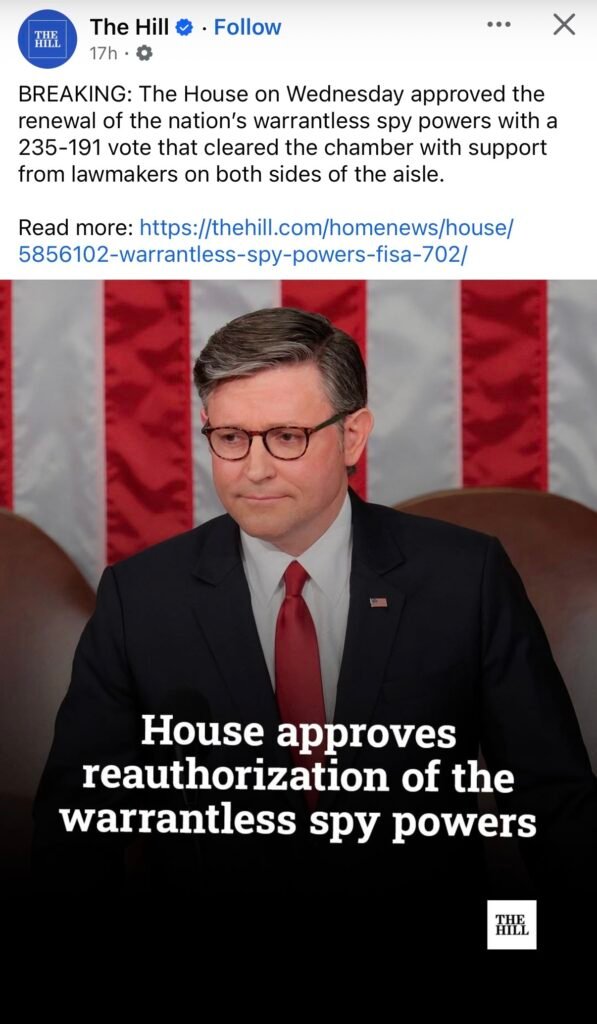
Meanwhile, concerns over government surveillance continue to grow. The U.S. House recently approved the renewal of the nation’s warrantless surveillance powers in a bipartisan vote, demonstrating once again that expanded monitoring authority is one of the few issues capable of receiving strong support from both sides of the political aisle.
None of this proves the Antichrist is here.
But it does remind us how quickly societies can normalize surveillance, surrender privacy, and embrace systems previous generations would have considered unthinkable.
So what should Christians do?
Not panic.
Not descend into conspiracy obsession.
Not lose hope.
We remain faithful. We preach the Gospel. We walk in discernment. And we keep looking up.
“Even so, come, Lord Jesus.”
— Revelation 22:20
About The Author











Thank you