
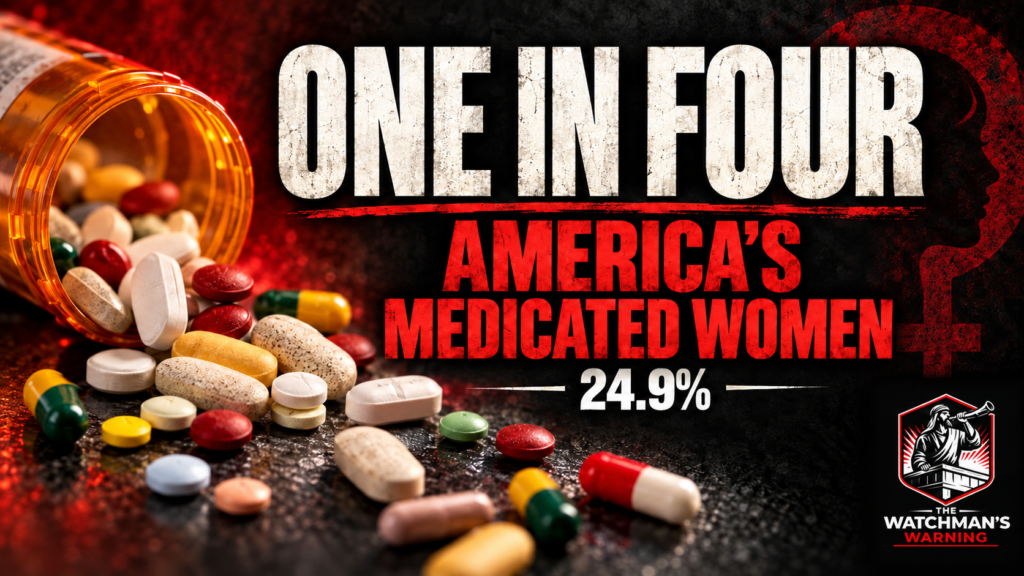
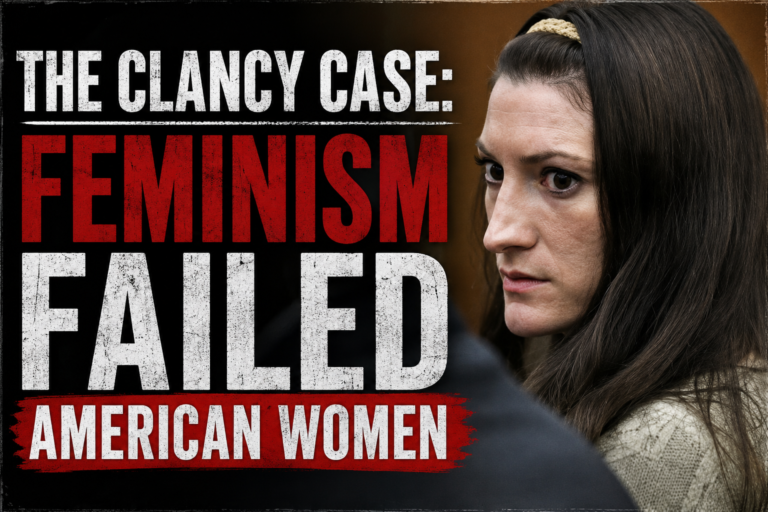
We have been writing and speaking extensively concerning the recent trial of Lindsay Clancy. Her defense argued that postpartum psychosis and an extensive psychiatric-medication regimen had left her unable to appreciate the wrongfulness of what she did. Prosecutors rejected that explanation and argued that the killings were intentional. The jury could not reach a verdict, and the case ended in a mistrial.
This case has dragged another issue into the spotlight: America’s dependence on psychiatric medication. That does not mean a prescription caused the Clancy killings. But it does mean we should stop pretending that widespread psychiatric medication is a small or irrelevant feature of modern life.
According to the Centers for Disease Control and Prevention, one in four adult women reported taking medication during the previous year for anxiety, depression, emotions, concentration, behavior, or other mental-health concerns. The comparable number for men was 13.4 percent.1
We need to be able to admit that something is not right. This is not an attack on women who take medication, that medication is never appropriate, or that a woman in genuine distress should be told to suffer silently. Such talk is foolish.
But compassion does not require blindness. It is possible to care for suffering women and still say that a society in which one in four women needs mental-health medication is not a society that is flourishing. A culture cannot be that medicated and that mentally healthy at the same time. We have normalized an alarming level of female distress, handed it a prescription, and called the whole arrangement progress.
We must reject the lie that the answer to a nationwide spiritual and cultural crisis is simply a larger supply of prescriptions. Not every troubled conscience is a chemical imbalance. Sometimes sorrow and anxiety is the warning that a person has built his life on a false foundation. The answer to conviction is not to numb it until it goes quiet. A culture that treats every painful emotion as a disorder to be chemically silenced may ease symptoms for a moment, but it can also silence the very alarm calling a person back to responsibility.
The human soul is not merely chemistry. Mankind is made in the image of God. He has a body, but he also has a soul. He is accountable to his Creator. A medication may assist a person dealing with a physical or psychological burden. It cannot give her a reason to live. It cannot restore a marriage. It cannot replace the steady love of a faithful spouse. It cannot give a child the security of a godly home. It cannot bring peace with God.
There is also a sharp difference between getting help and surrendering to an identity built around illness. America has created a therapeutic culture where every discomfort becomes a diagnosis, every diagnosis becomes an identity, and every identity demands affirmation. A woman is no longer encouraged to endure hardship, grow in grace, serve others, trust the Lord, and find strength in duty. She is encouraged to look inward without end. How do you feel? What has been done to you? What label best explains you? What medication will dull the edge?
There is a place for medical care and counseling. But neither should become a substitute for the hard, steady, sanctifying work of living as God made us to live.
One in four is not a number to celebrate. It is a warning light. It tells us that modern America is producing women who are increasingly overwhelmed, anxious, medicated, and alone.
I do not pretend to know the complete answer to this problem, or to understand every cause behind it. Nobody can reduce the burdens carried by millions of women to one slogan, one diagnosis, or one drug. Our lives move faster than they were meant to move. Families are scattered. Mothers are isolated. We eat food saturated with chemicals and spend our days under artificial light, staring into screens, sleeping too little, and carrying pressures previous generations would scarcely recognize. There are physical causes, social causes, spiritual causes, and likely many things we have not yet understood.
Uncertainty about every cause, however, is no excuse for pretending there is no problem. Something is badly out of order. We may not yet know every reason why, but we ought to have enough honesty to stop calling it normal. It is past time to start asking the hard questions.
For more cultural commentary, Bible studies, and interviews, subscribe to The Watchman’s Warning on YouTube.
About The Author













A very insightful and timely article. Modern society has turned sin, and conviction for it, into a disease to be medicated, and many of these medications are downright dangerous. I suspect women are disproportionately affected because of the unbiblical roles our modern world has thrust them into for the sake of their so-called liberation. We live in perilous times.
I’m not a doctor, and I don’t even play one on TV, but I have watched friends try to manage these struggles with medication. For some, it worked out well and proved helpful. For others, the experience was much more difficult, and they faced even greater mental and emotional struggles, including, in some cases, suicidal ideations.
Thank you for talking about topics most are scared to even bring up.
We can’t go to the world to fix us.
Our hope is in The Lord.