In the pace of modern media, controversies rarely linger. A story dominates headlines for a day or two, social media erupts, and then the cycle resets. What felt urgent becomes forgettable almost overnight. Yet occasionally, a moment worth revisiting slips past too quickly, not because it lacked significance, but because it was buried before its implications could be fully understood.
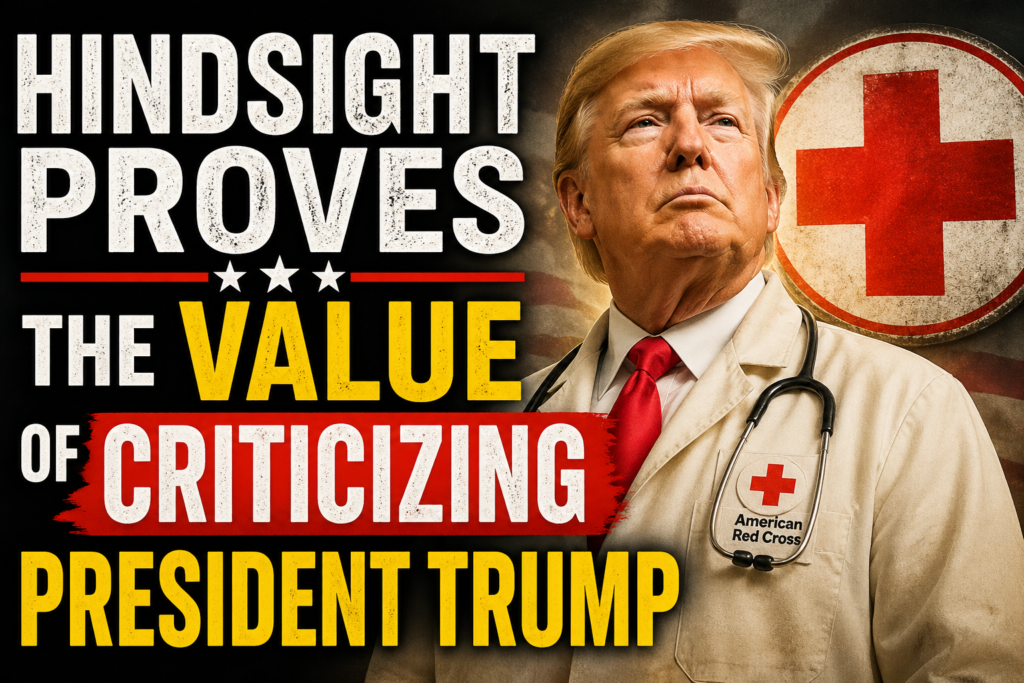
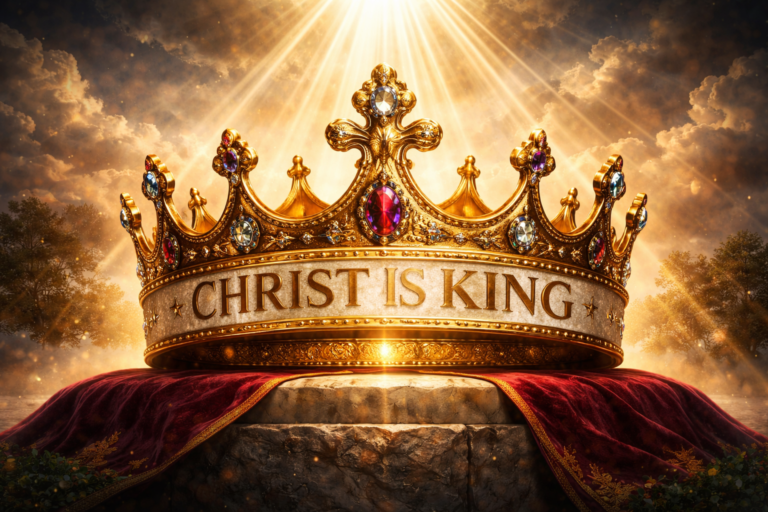
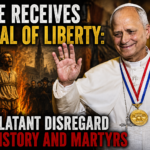
Such was the case with a recent controversy involving President Donald Trump and an image that drew criticism for its use of religious symbolism. At the time, reactions were immediate but divided. Critics raised concerns about irreverence and the inappropriate blending of sacred things with political branding. Supporters, however, moved just as quickly to dismiss the issue.
Many characterized the image as harmless, “just Trump being Trump.” Others argued it was satire, a calculated jab at political opponents or the pope. Some insisted it was simply trolling, another example of the President provoking outrage for effect. The underlying message from defenders was consistent: this was not worth taking seriously.
The backlash from his base, however, carried enough weight to prompt action from the President.
Speaking up made a difference.
This runs counter to a common assumption in modern discourse: that individual voices have little to no impact. In a world dominated by large platforms, institutional messaging, and algorithm-driven narratives, it is easy to conclude that most objections serve no purpose. While this is the common narrative, honoring principle in this situation contributed to a tangible outcome. President Trump removed the image. He made up a pretty unbelievable response, but regardless, he removed the image and addressed it.
That outcome may seem minor in isolation. An image was posted, debated, and then taken down. But the broader implication is not minor at all.
It demonstrates that principle, when voiced, still has power.
A key issue exposed by this episode is the tendency to evaluate actions based on intent rather than standard. Much of the initial defense of the image rested on assumptions about what the President “meant.” Was it a joke? Was it satire? Was it strategic provocation?
But intent is often unknowable—and more importantly, it is not the proper measure of appropriateness.
Standards exist independently of motive.
If something crosses a line, it does so regardless of whether it was meant seriously or ironically. To excuse questionable actions on the basis of assumed intent is to erode those standards over time.
This is where the role of public criticism becomes essential.
Freedom of speech is often discussed in terms of rights. But it also carries a responsibility: the obligation to use that freedom in defense of truth and principle.
Rights that go unused do not remain strong indefinitely.
History shows that freedoms, when neglected, tend to diminish. Not always through direct restriction, but through cultural atrophy.
The response to the Trump image controversy highlights the alternative. Rather than remaining silent, critics voiced their concerns. They did so despite pushback, dismissal, and the likelihood that their objections would be ignored. By conventional standards, their efforts may have appeared insignificant.
But they were not.
They demonstrated that not everything would be excused for the sake of political alignment. They reinforced the idea that principles apply consistently, not selectively. And in doing so, they contributed to an outcome that reflected those principles, even if only in a small way.
That is how freedom of speech preserves itself.
Not through passive acknowledgment, but through active use.
The lesson here extends beyond any single political figure or moment. It speaks to a broader cultural dynamic, one in which loyalty often competes with integrity, and where the temptation to defend “our side” can override the commitment to objective standards.
Hindsight exposes those tensions.
And for those who miss the point of this article, criticizing the man we voted for isn’t betrayal. It’s accountability. If we can’t correct our own side, we’ve already lost the moral ground.
“They that forsake the law praise the wicked: but such as keep the law contend with them.” Proverbs 28:4
About The Author


Thank you