

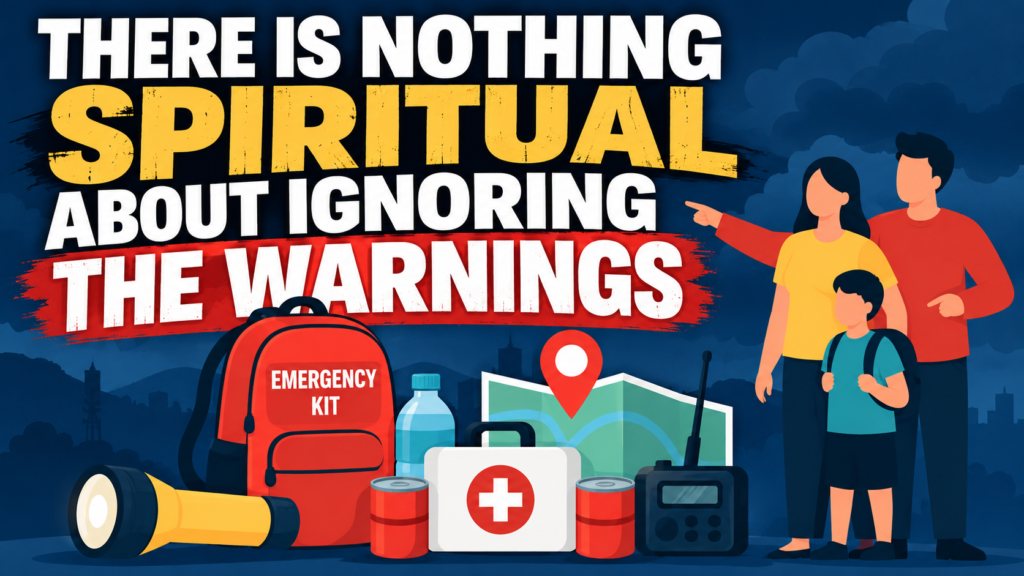
Across the world, governments are increasingly urging their citizens to prepare for emergencies. These warnings are not confined to countries experiencing war or political instability. They are coming from some of the wealthiest and most developed nations on earth.
These recommendations are being made in response to a variety of potential emergencies, including natural disasters, military conflicts, cyberattacks, disruptions to infrastructure, and interruptions in the supply chain. We should not automatically conclude that these governments possess secret knowledge of some impending catastrophe. Nevertheless, when governments around the world are openly encouraging their citizens to become more self-reliant, it would be foolish to dismiss the advice simply because we find the possibilities unpleasant.
I am not writing as someone who has merely watched survival videos or read books about emergency preparedness. I lived through the devastation of Hurricane Helene in Western North Carolina. When Helene struck our mountains in September 2024, communities were devastated. Roads were destroyed, electricity disappeared, communications failed, and ordinary necessities suddenly became difficult to obtain. The conveniences upon which modern Americans depend were interrupted almost overnight. I had taken steps to prepare before the storm, and those preparations made a difference. While many around me were struggling to obtain basic necessities, I was in a better position to provide for my own family and even assist others. That experience reinforced something I already believed: preparedness is an expression of responsibility.
The modern American lifestyle has created an extraordinary dependence upon systems that most people scarcely understand. We assume that the grocery store will always have food, the faucet will always produce clean water, the electrical grid will always function, and our cell phones will always connect us with the outside world. But what happens when those assumptions prove false? During an emergency, the government cannot immediately reach everyone. Even the most competent emergency response cannot eliminate the difficulties associated with a widespread disaster.
For that reason, I believe every American family should work toward maintaining a minimum of one month’s worth of emergency food for every member of the household. This does not require purchasing expensive survival meals or filling an underground bunker with military rations. Ordinary shelf-stable foods can accomplish much of the same purpose. Rice, beans, canned vegetables, canned meats, pasta, peanut butter, and other nonperishable foods can be purchased gradually and rotated into normal household consumption. The important thing is having enough food to sustain your family when obtaining more becomes difficult or impossible. Naturally, those provisions should include the means to prepare the food without relying entirely upon electricity.
Water is equally important, and perhaps even more urgent. A family should maintain a reasonable supply of drinking water and possess a reliable means of obtaining and purifying additional water. Rainwater collection, properly maintained filtration equipment, and suitable emergency water treatment methods can be valuable when municipal water systems are disrupted. Not every filter removes viruses or chemical contamination, however, so families should understand the limitations of their equipment. A person may survive for an extended period without food, but access to safe drinking water becomes critical much more quickly.
I would also encourage responsible, firearm ownership for those who can safely possess and use firearms. During a widespread disaster, police and emergency services may be overwhelmed or temporarily unable to reach isolated communities. The responsibility to protect one’s household does not disappear simply because normal services have been interrupted. Responsible ownership is about being prepared to defend innocent life, not looking for confrontation.
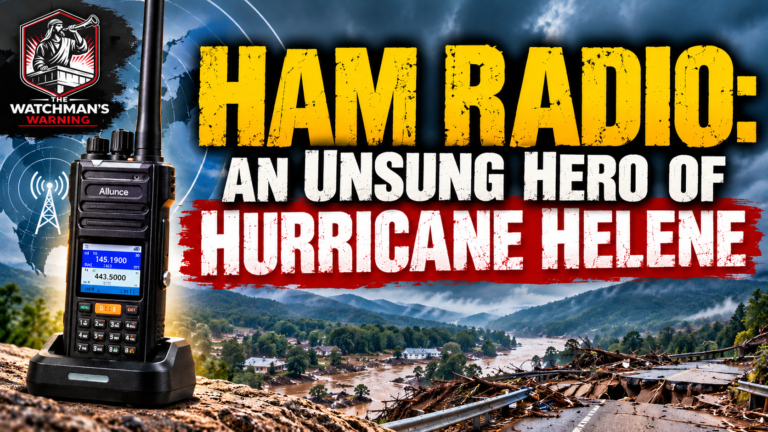
Another frequently overlooked necessity is communication. I strongly encourage families to consider amateur radio, commonly called ham radio. When cellular networks and internet connections fail, properly equipped amateur radio operators may still be able to communicate over considerable distances. Amateur radio requires knowledge, practice, appropriate equipment, and generally an FCC license to transmit, but it can provide an important additional means of communication when conventional systems are unavailable. During a major disaster, the ability to communicate with others can make an enormous difference, particularly when communities become isolated.
Of course, food, water, personal protection, and communication equipment are only part of preparedness. Families should also consider medications, first-aid supplies, emergency lighting, alternative power sources, sanitation, heating, and the particular needs of children and elderly relatives. The goal is not to anticipate every conceivable catastrophe but to develop enough independence that a temporary disruption does not immediately become a personal crisis.
I realize that some Christians may regard this emphasis upon preparedness as unnecessary or even contrary to faith. After all, are we not commanded to trust the Lord for our daily provisions? Certainly we are. But trusting God has never required us to disregard wisdom. Proverbs 22:3 declares, “A prudent man foreseeth the evil, and hideth himself: but the simple pass on, and are punished.” Notice that the prudent man does not wait until calamity arrives before taking action. He recognizes danger and responds accordingly. Scripture does not condemn his foresight. It commends it.
Consider Joseph in Egypt. When God revealed that seven years of famine would follow seven years of plenty, Joseph did not dismiss the warning under the pretense that God would provide. Instead, he organized an extensive effort to store food during the years of abundance. Genesis 41:48 tells us, “And he gathered up all the food of the seven years, which were in the land of Egypt, and laid up the food in the cities: the food of the field, which was round about every city, laid he up in the same.” God’s provision came through preparation. The grain stored during the years of plenty preserved lives during the years of famine.
Neither should we confuse preparation with placing our trust in material possessions. A pantry full of food cannot guarantee our safety, and a collection of emergency equipment cannot protect us from every possible circumstance. Our ultimate confidence must remain in the Lord. Yet there is a considerable difference between trusting God and presuming upon Him.
First Timothy 5:8 reminds us of the seriousness of providing for our households: “But if any provide not for his own, and specially for those of his own house, he hath denied the faith, and is worse than an infidel.” While this passage addresses the responsibility of providing for one’s household, the principle should cause us to consider our obligations seriously. We should not knowingly neglect reasonable opportunities to protect and provide for those entrusted to our care.
For those who cannot afford a month’s supply immediately, begin with three days, then work toward a week, and continue building from there. Preparedness should be deliberate and sustainable, not financially reckless. A family that gradually builds its emergency supplies over several months may ultimately be better prepared than one that impulsively spends money it cannot afford in response to frightening headlines.
Hurricane Helene taught many of us in Western North Carolina how quickly normal life can change. I hope never to experience anything like it again. But I also know that hoping something will never happen is not the same as preparing for the possibility that it might. The governments issuing these warnings may be concerned about different threats, but the underlying lesson is the same: modern infrastructure is not invincible, and every household should possess some measure of independence when those systems fail.
With today’s article, I am also including a 72-Hour Emergency Preparedness Checklist for four:
FOOD
- 3 days of nonperishable food per person
- Canned meats, soups, beans, and vegetables
- Peanut butter, crackers, nuts, and granola bars
- Canned or dried fruit
- Manual can opener
- Disposable plates, cups, and utensils
- Baby formula, baby food, or special dietary supplies if needed
WATER
- Minimum of 3 gallons of water per person (1 gallon per day)
- Portable water filtration system
- Water purification tablets or appropriate treatment supplies
- Clean containers for collecting and storing water
LIGHTING AND POWER
- Flashlights for each family member
- Extra batteries
- Battery-powered lanterns
- Fully charged power banks
- Portable solar charger or backup power source
COMMUNICATION
- Battery-powered or hand-crank NOAA weather radio
- Two-way radios for family communication
- Amateur (ham) radio and appropriate licensing
- Written emergency contact information
- Paper map of your local area
MEDICAL AND HYGIENE
- First-aid kit
- At least 3 days of prescription medications
- Toilet paper and wet wipes
- Soap and hand sanitizer
- Trash bags
- Toothbrushes and toothpaste
- Diapers and infant supplies if needed
- Feminine hygiene products
- Emergency toilet supplies
SAFETY AND SHELTER
- Fire extinguisher
- Working smoke and carbon monoxide detectors
- Firearm and ammunition
- Sturdy shoes and work gloves
- Weather-appropriate clothing
- Warm blankets or sleeping bags
- Waterproof matches or lighter
- Whistle and basic multitool
- Plastic sheeting and duct tape
IMPORTANT EXTRAS
- Cash in small bills
- Copies of identification and insurance documents
- Vehicle with at least half a tank of fuel
- Pet food and supplies if applicable
- Entertainment and comfort items for children
- Family emergency meeting and evacuation plan
Three days of preparedness is a starting point, not the ultimate goal. Every household should work toward maintaining at least one month’s supply of food, dependable access to safe drinking water, and the necessary equipment to remain self-sufficient during an extended emergency.

About The Author





Thank you
Excellent